Misinformation is something we run into constantly, especially on social media, and it’s not always obvious what’s true or misleading. Because of that, tools like RumorGuard and the Bad News game are designed to help people understand how misinformation works and how to recognize it. After using both, I noticed they each focus on different parts of the problem, which actually makes them more useful together.
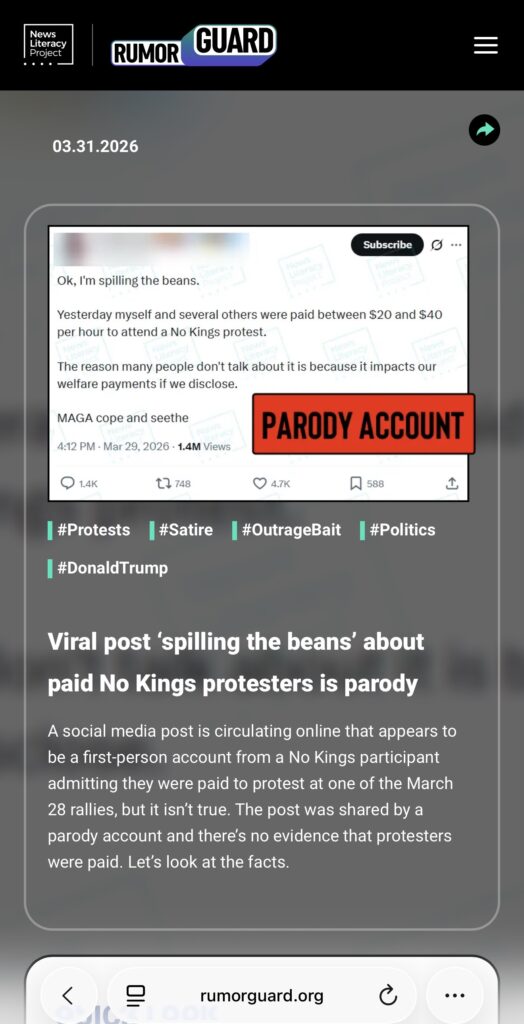
The first tool I explored was RumorGuard, created by the News Literacy Project. It uses real viral posts and claims, then walks you through whether they are accurate or not. What stood out to me is how it explains the reasoning behind each answer instead of just labeling something as true or false. It highlights things like missing context, unreliable sources, or misleading visuals. It almost feels like you’re being guided through the same process journalists use when verifying information. Since the examples are similar to what people see online every day, it feels practical and easy to apply outside of the tool.
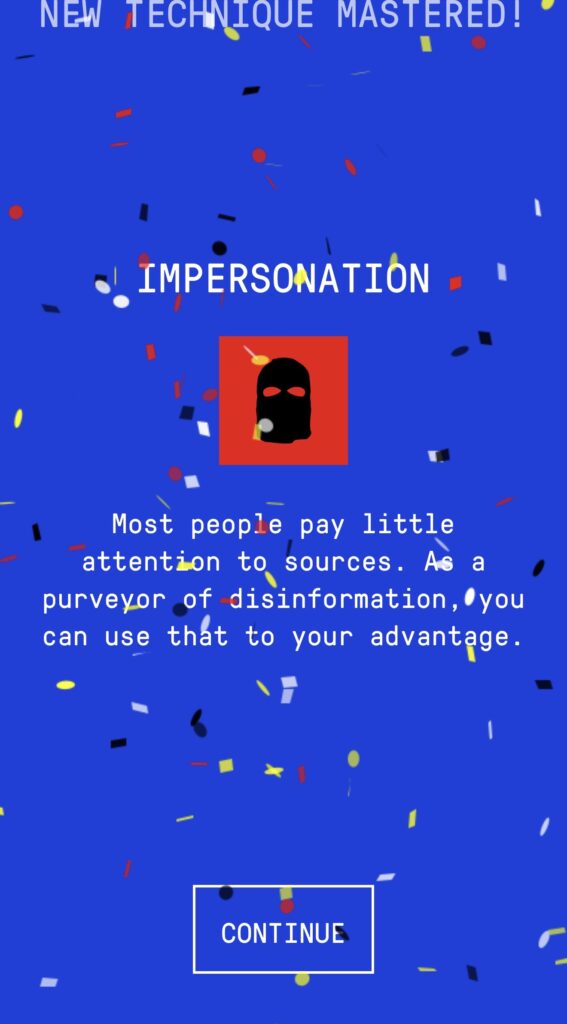
The second tool, the Bad News game, takes a completely different approach. Instead of analyzing misinformation, you actually create it. The goal is to build a following by using strategies like emotional appeals, exaggeration, and conspiracy thinking. While it might seem strange at first, it quickly shows how simple it is to influence people’s opinions. This experience is based on inoculation theory, which suggests that exposure to misinformation techniques can help people recognize them later. Playing the game made it clearer how certain tactics are used to grab attention and spread quickly.
Looking at both tools side by side, they each have their strengths. RumorGuard focuses more on developing critical thinking and fact checking skills, which are useful in real situations. It’s straightforward and informative, making it easy to follow. The Bad News game is more interactive and focuses on the strategies behind misinformation. It helps explain why certain content is convincing and why it spreads so easily. One limitation of the game is that it could make users overly cautious, but overall it still provides a valuable perspective.
The article “The Use of Critical Thinking to Identify Fake News” explains how important it is to actually stop and question what you’re seeing online instead of just believing it right away. It talks about how people tend to trust information that matches their own opinions, which is why misinformation spreads so easily. This connects to tools like RumorGuard and the Bad News game because they both help you think more critically. Overall, it shows that learning how to question information is one of the best ways to avoid being misled.
In general, interactive tools like these are a strong way to teach topics like misinformation. They go beyond just explaining concepts and instead involve the user in the learning process. The Bad News game helps people understand how misinformation is created, while RumorGuard shows how to evaluate and respond to it. With how quickly false information spreads online, learning these skills is becoming more necessary.
Referances:
No, Minnesota Vikings’ new stadium menu isn’t “completely vegan.” (2024). Rumorguard.org. https://www.rumorguard.org/post/no-minnesota-vikings-new-stadium-menu-isn-t-completely-vegan
gusmanson.nl. (n.d.). Bad News – Play the fake news game! Bad News V2. https://www.getbadnews.com/en
Machete, P., & Turpin, M. (2020). The Use of Critical Thinking to Identify Fake News: A Systematic Literature Review. Lecture Notes in Computer Science, 12067, 235–246. https://doi.org/10.1007/978-3-030-45002-1_20
Leave a Reply