Category: Uncategorized

  • El Apagón and Civic Imagination in Puerto Rico

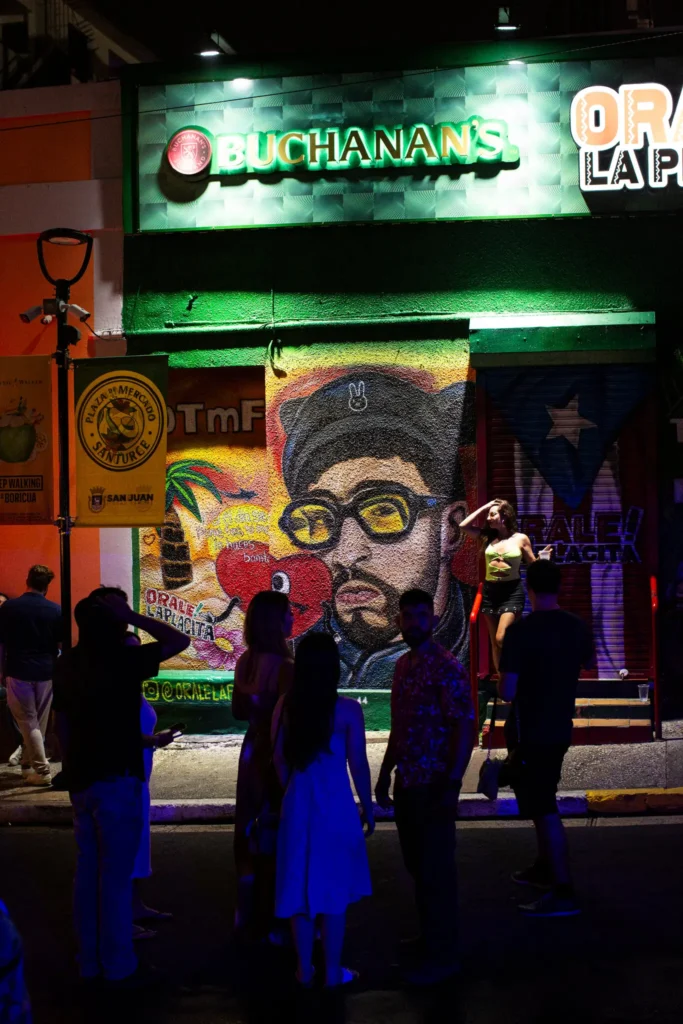
    For this blog post, I chose El Apagón by Bad Bunny as my cultural resource. While it is a song, it is also much more than entertainment. Through both the music and the documentary that accompanies it, El Apagón encourages audiences to think critically about the future of Puerto Rico and imagine alternatives to current social, political, and economic conditions. Because of this, I believe it is a strong example of civic imagination.

    According to the Civic Imagination Project, civic imagination is the ability to imagine alternatives to current cultural, social, political, or economic conditions. The reading explains that people cannot create change unless they can first imagine what a better future might look like. El Apagón does exactly that. The song draws attention to issues such as gentrification, displacement of local residents, government failures, and unequal access to resources in Puerto Rico. Rather than simply criticizing these problems, the project encourages listeners to imagine a Puerto Rico where local communities have greater control over their land, culture, and future.

    One reason this cultural resource is so powerful is that it uses popular culture to spark civic engagement. The Civic Imagination Project explains that stories, music, films, and other forms of media can help people envision possibilities that may not seem achievable in everyday life. Just as previous generations used books, songs, and films to inspire social movements, El Apagón uses music to raise awareness and encourage conversation about issues affecting Puerto Rican communities. The song reaches audiences who may never read a policy report or political article but can still learn about these issues through culture and media.

    The alternative imagined in El Apagón would require significant systemic change. Many of the concerns raised involve housing, economic development, government accountability, and the protection of local communities. Creating the future imagined by the song would require changes in public policy and decision making processes. It would also require greater civic participation from residents and leaders who are willing to prioritize the needs of local communities. This reflects one of the major ideas from the Civic Imagination readings: meaningful social change requires people to imagine new possibilities before they can work toward achieving them.

    The song also connects to the concept of digital civic imagination discussed in Christina Evans’ “The Nuts and Bolts of Digital Civic Imagination.” Evans argues that media and technology can help people transform concerns about social issues into collective action. In many ways, El Apagón demonstrates this idea. Through digital platforms, social media, and online discussions, the message of the song spread far beyond Puerto Rico. People were able to learn about issues affecting local communities, share information, and participate in conversations about possible solutions. The project shows how media can become a tool for civic engagement rather than simply entertainment.

    At the same time, some aspects of the imagined alternative already exist today. Community organizations, activists, and residents continue working to preserve Puerto Rican culture and advocate for policies that benefit local communities. Digital media has made it easier for people to raise awareness and organize around shared concerns. However, the future envisioned by El Apagón has not been fully achieved, which is why the message remains relevant.

    Overall, El Apagón is an excellent example of civic imagination because it encourages audiences to imagine a different future and think critically about current conditions. By combining music, storytelling, and activism, the project demonstrates how popular culture can inspire civic engagement and social change. As discussed throughout Module 7, cultural resources have the power to help people imagine alternatives to existing systems, and El Apagón shows how media can become a powerful tool for creating those conversations and possibilities.

    https://genius.com/Bad-bunny-el-apagon-lyrics
    https://www.nytimes.com/2026/02/08/us/bad-bunny-puerto-rico.html
  • 24Hour Media Diary- Data & Algorithms

    For this media diary I paid closer attention not only to the media I consumed throughout the day, but also to the kind of information and data I was giving away while using different platforms. I realized that even when I am casually scrolling or posting online, apps are constantly collecting information about my interests, habits, location, and behavior to shape my feed and advertisements. Throughout the day, I noticed how personalized my online experience has become because of the data I provide through my activity.

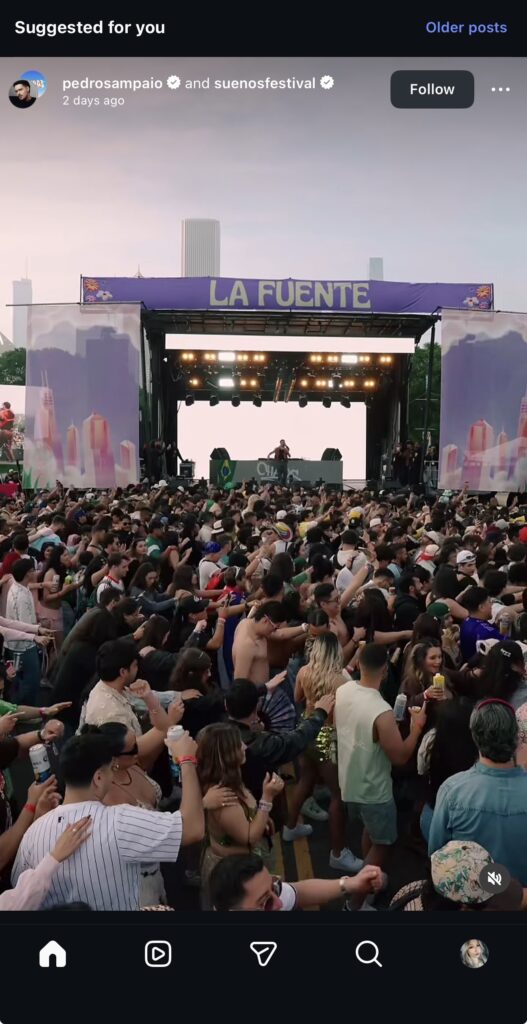
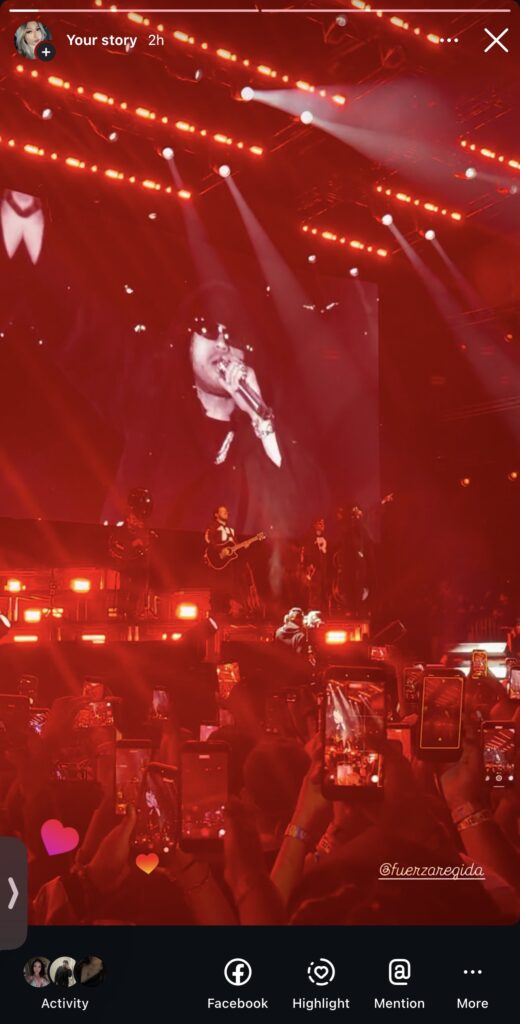
    At around 8 a.m. I opened Instagram to post pictures and videos from Sueños Music Festival, specifically performances from Fuerza Regida. By posting stories and interacting with concert content, Instagram can gather information about my music interests, the events I attend, and the people or brands I interact with. Since the app tracks engagement, location tags, hashtags, and the type of content I watch the longest, it will likely continue recommending regional Mexican music content, concerts, and festival advertisements on my feed. Posting publicly also shares behavioral data such as what time I am active online and the type of lifestyle content I enjoy.Suenos post in my Instagram feedMy Instagram story post of Fuerza Regida

    Suenos post in my Instagram feed
    My Instagram story post of Fuerza Regida

    Around 9 a.m. I checked my email. Even though checking email feels private, companies still collect data from it. Marketing emails track whether I open them, click links, or interact with promotions. Since I often receive emails from school and clothing brands advertisers can learn about my interests in fashion, education, and food service. Spam filters and algorithms also analyze my behavior patterns to decide which emails are important or promotional. This reminded me that even simple online tasks create digital profiles about users.

    At about 10 a.m., I spent time scrolling through TikTok. TikTok probably collects the most behavioral data because it tracks every interaction including watch time, likes, comments, shares, rewatches, and even pauses on videos. My feed mostly included fitness videos, vacation content, beauty products, music clips, and lifestyle influencers. Because I interact with gym content and travel videos often, TikTok’s algorithm keeps recommending similar videos. This demonstrates how personalized algorithms become stronger over time based on user behavior. The app can collect  information such as age range, interests, and shopping habits based on engagement patterns.

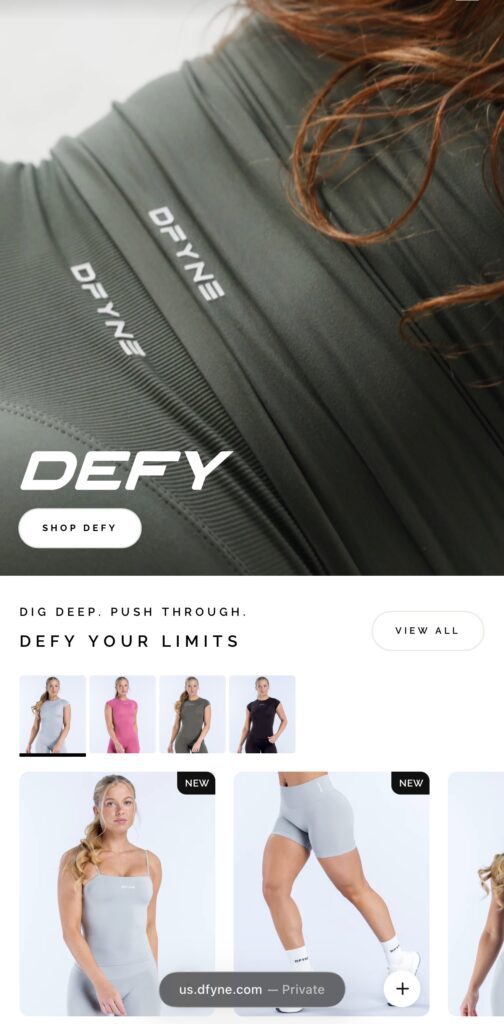
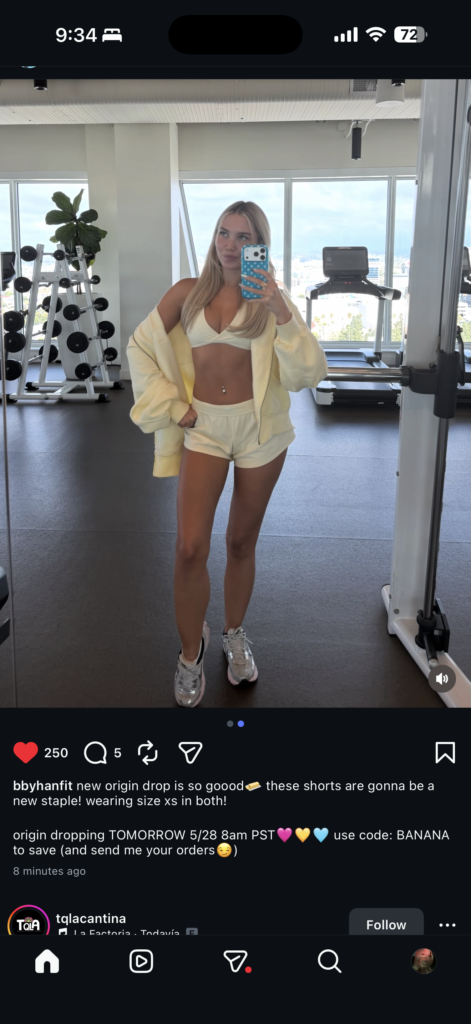
    At 10:30 a.m. I checked the new clothing drop on the  DFYNE website. Since I frequently look at activewear brands and gym clothing, websites like DFYNE likely use cookies and browsing data to track what products I click on, how long I stay on pages, and which items I may want to purchase later. After visiting the site, I noticed that fitness clothing advertisements started appearing on Instagram and TikTok shortly after. This shows how companies share browsing information through advertising trackers and personalized marketing systems.


    This is the Dfyne webite
    This is an influencer promoting the Dfyne Origin drop

    Throughout the rest of the day, I also noticed promoted content mixed naturally into my feeds. Many advertisements looked similar to normal posts, which makes it easy to interact with sponsored content without realizing it immediately. Because I engage with fitness brands, concerts, beauty products, and travel content, algorithms continue feeding me similar advertisements and influencer posts. My social media activity creates a cycle where platforms continuously learn more about me and refine the content they show.

    After reflecting on my media activity as a whole, I realized how much personal information is constantly being collected online even during casual use. Before this assignment, I mostly thought about privacy in terms of passwords or security settings, but now I understand that algorithms are also built around behavioral tracking. Every like, search, click, and scroll contributes to the type of content and advertisements I receive. While personalized feeds can be convenient, they also limit what users see and encourage certain interests or consumer habits. This assignment made me more aware of how connected my digital activity is across multiple platforms and how much data companies gather from everyday online behavior.

  • The truth about fitness advice on TikTok: What’s real vs what’s misleading.

    If you’ve ever scrolled through TikTok looking for workout tips or ways to lose weight, you’ve probably seen videos promising fast results. Whether it’s waist trainers, detox teas, or quick ab workouts that claim to “burn belly fat,” this type of content is everywhere. While some of it seems helpful, a lot of it is actually misleading.

    Research shows that health misinformation is common on TikTok, and many videos lack scientific accuracy or credible sources (PMC study). This becomes a problem because many young people rely on social media instead of professional health advice.

    Why Fitness Misinformation Spreads So Easily

    Social media platforms like TikTok prioritize engagement over accuracy, meaning content that is entertaining or aesthetic is more likely to go viral even if it is misleading (PMC study). Experts also warn that influencers are not always qualified to give health advice, which increases the spread of misinformation (CNET). Additionally, many creators promote products for financial gain, which can bias their recommendations and make misleading claims more common.

    Common Fitness Myths on TikTok

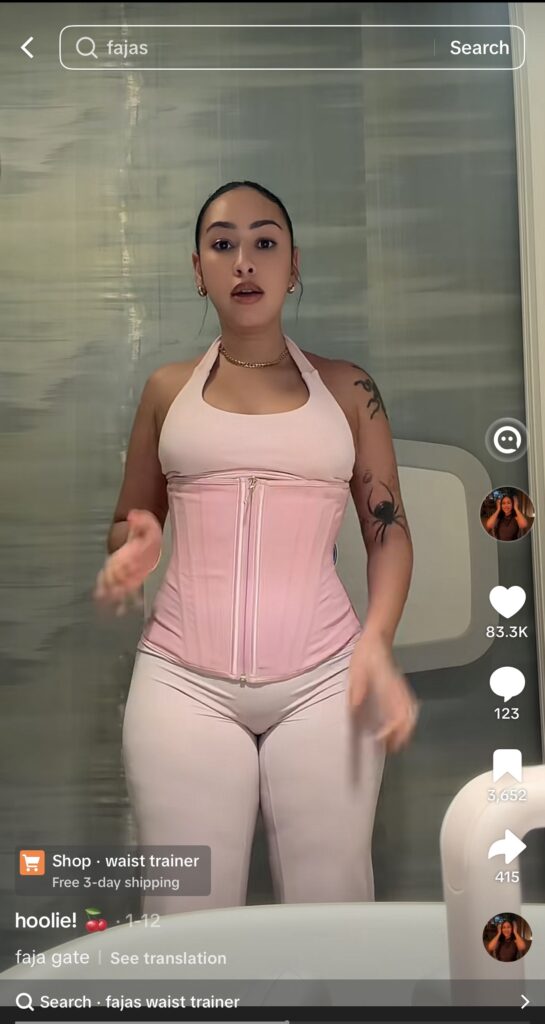
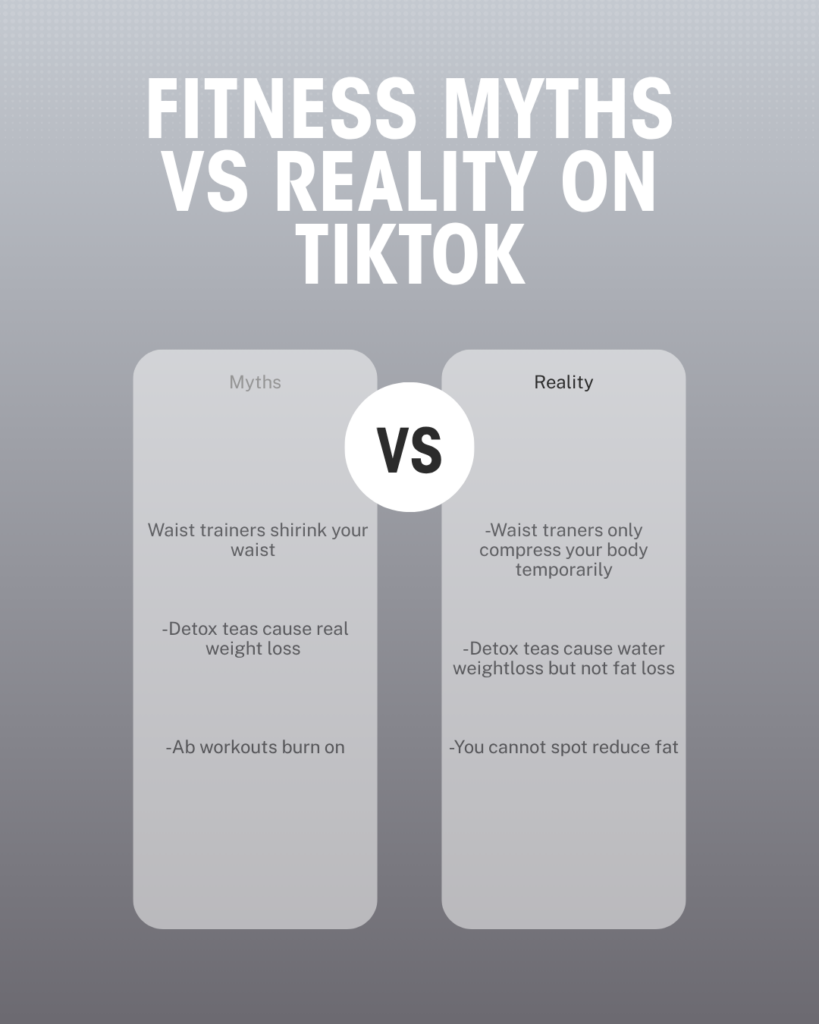
    Myth #1: Waist Trainers Can Shrink Your Waist

     TikTok: https://www.tiktok.com/t/ZP8gwmoFp/
     

    In this TikTok, a creator wears a waist trainer during her workout, suggesting it helps slim the waist. However, waist trainers do not cause real fat loss. They only compress the body temporarily and do not create lasting changes. According to WebMD, waist trainers do not help you lose belly fat, because fat is stored throughout the body and cannot be reduced in just one area. WebMD also explains that wearing a waist trainer during exercise can be uncomfortable and may interfere with natural body movement. Because the material is tight and restrictive, it can make it harder to breathe properly and prevent the body from moving as it normally would during a workout. This shows how misleading TikTok content can be. In videos like this, the visual appearance of a smaller waist makes it seem like the product is working, even though there is no scientific evidence supporting long term results. As a result, viewers may believe they are seeing real progress when they are actually only seeing a temporary change.

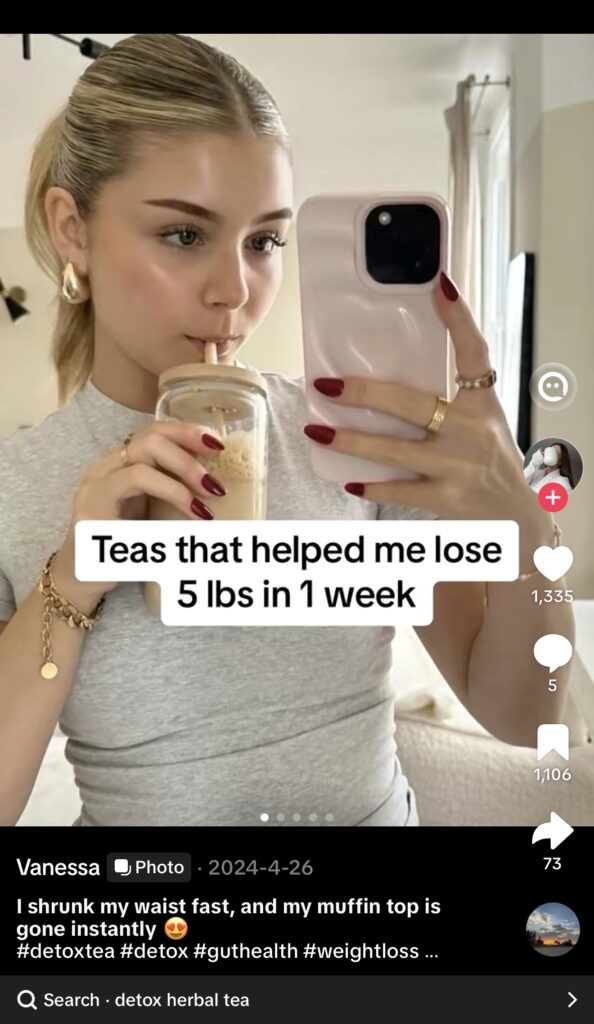
    Myth #2: Detox Teas Help You Lose Weight

    TikTok: https://www.tiktok.com/t/ZP8gw8b12/

    This video claims that drinking detox tea led to quick weight loss.In reality, detox products do not lead to fat loss and are often misleading. Experts explain that the body already has natural detox systems, making these products unnecessary (Independent). In addition to being misleading, detox teas are often marketed as a quick and easy solution for weight loss, which makes them especially appealing on platforms like TikTok. According to The Independent, many fitness claims on social media rely on exaggerated results that are not supported by scientific evidence. Detox teas fall into this category because they promote unrealistic outcomes without explaining how the body actually works. In reality, the body already has built in detoxification systems, mainly the liver and kidneys, which naturally remove toxins without the need for special products. Additionally, many detox teas only result in temporary changes, such as water loss, which can make it seem like weight has been lost when it has not. This creates a false impression of effectiveness and can lead viewers to spend money on products that do not actually work. Overall, this example shows how TikTok can amplify misleading health claims by combining personal experiences with visually convincing results, even when those results are not supported by science.

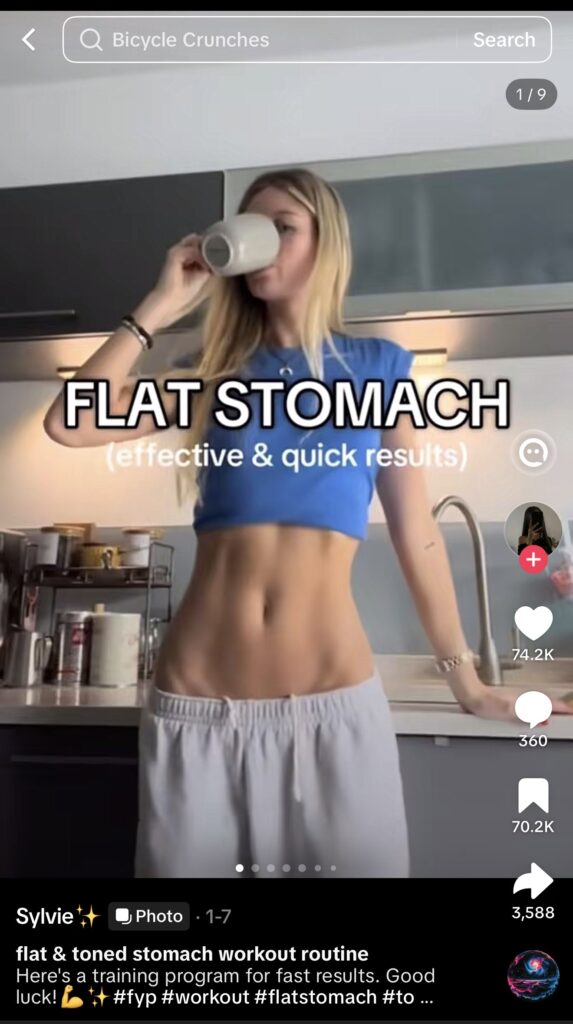
    Myth #3: Ab Workouts Burn Belly Fat

    TikTok: https://www.tiktok.com/t/ZP8gwhX7L/

    This type of video suggests that doing ab exercises will specifically reduce stomach fat. However, research shows that fat loss happens across the entire body, not in one specific area, meaning “spot reduction” is not effective (PMC study). In addition to being misleading, detox teas are often marketed as a quick and easy solution for weight loss, which makes them especially appealing on platforms like TikTok. However, research shows that these types of products do not lead to real fat loss. Detox teas promote unrealistic outcomes without explaining how the body actually works. Many detox teas only result in temporary changes, such as water loss, which can make it seem like weight has been lost when it has not. This creates a false impression and can lead viewers to spend money on products that do not actually work. 

    Why This Misinformation Is Harmful

    Fitness misinformation can lead to unrealistic expectations, unhealthy habits, and confusion about health and nutrition (CNET). When people are constantly exposed to content that promises fast results or dramatic body changes it can create a distorted understanding of what is actually realistic or healthy.For young women especially, repeated exposure to idealized body standards and “quick fix” solutions can negatively impact self image. Many TikTok videos focus heavily on appearance, which can make viewers feel pressure to achieve certain body types in unrealistic ways. Over time, this can lead to unhealthy behaviors such as extreme dieting, over exercising, or relying on products that do not actually work. Misinformation can cause people to waste money and time on ineffective solutions. Products like detox teas or waist trainers are often marketed as easy fixes, but they are not supported by scientific evidence. This can be frustrating for users who do not see results and may feel like they are doing something wrong. Overall, fitness misinformation is harmful because it not only spreads inaccurate information, but also influences how people think about their bodies, health, and what it takes to see real results.

    How to Spot Fitness Misinformation Online

    • Look for credible sources
      Reliable fitness advice is usually supported by research or comes from certified professionals. If a creator does not provide sources or credentials, their claims should be questioned.
    • Avoid content promising quick fixes or extreme results
      Many misleading videos rely on exaggerated claims like “lose weight fast” or “instant results.” These are often unrealistic and not supported by science.
    • Be cautious of influencers selling products
      If a creator is promoting a product, they may be financially motivated to make it seem more effective than it actually is. This can lead to biased or misleading information.
    • Check if claims are supported by research, not just personal experience
      Personal results do not equal scientific proof. Just because something worked for one person does not mean it will work for everyone.

    Experts recommend approaching social media content with skepticism and taking time to verify information before trusting it (The Independent). Developing these habits can make it easier to recognize misinformation and avoid being influenced by misleading trends.

    Conclusion

    Fitness content on TikTok can be helpful, but it can also be misleading. Many viral trends are designed to gain attention rather than provide accurate or evidence based information. Because of this, it is important to be aware of how easily misinformation can spread online. By learning how to recognize misleading claims and question what you see, you can make better decisions about your health and fitness. Social media is a powerful tool, but being an informed and critical user is even more important. Taking the time to verify information and rely on credible sources can help you avoid falling for unrealistic or harmful advice. 

    References

  • Who really owns our conversations online?

    Social media is always called the new public square but honestly I don’t fully agree with that. It feels public because we use it to talk about everything like news, trends, opinions, and our personal lives but at the end of the day it’s still owned by private companies. Apps like Instagram, TikTok, Facebook, and X aren’t actually public spaces. They’re businesses, and that means they control what we see, what gets pushed, and even what gets taken down.

    The Free Speech Project talks about how social media has basically become where most public conversations happen now, and I do see that in my own life. I’m on Instagram and TikTok pretty much every day, especially for fitness content, trends, and just staying updated on what people are talking about. Anyone can post, comment, and share, which is why it feels so open and interactive. That’s one of the biggest benefits these platforms make it super easy to connect and have your voice heard. But at the same time, there’s a downside. A small number of companies have a lot of control over everything. The Heinz College article explains how each platform has its own rules for moderation, which is why things can feel inconsistent. Sometimes people complain about censorship, and other times it feels like there’s not enough control over misinformation. Either way, the power isn’t really in the hands of users it’s in the hands of the platform.

    A good example of this is Meta getting rid of third party fact checkers and switching to a more community based system. Some people think that’s more fair, but others are worried it could make misinformation spread even faster. This just shows how quickly things can change depending on who’s in charge. Government involvement makes things even more complicated. The ABC News article about the Supreme Court cases shows that even the government doesn’t fully know how to regulate social media yet. The big question is whether platforms should be treated like publishers or more like public spaces. Personally, I don’t think the government should control everything people post, but I do think there should be more transparency. Like, if something gets taken down or pushed back we should know why, and there should be a real way to appeal it or question the control.

    I also think decentralization and portability are really important. Right now, if you build a following on one app, you’re stuck there. If your account gets deleted or the algorithm changes, you can lose everything. That’s kind of scary when you think about it. It would make more sense if users had more control over their content and could move their audience between platforms more easily. 

    Overall, I feel like we technically own what we say, but platforms control how far it goes and whether people even see it. That’s a lot of power for a few companies to have. I think moving forward, there should be more transparency, more user control, and less reliance on just a few platforms. Personally, I’m trying to be more aware of where I get my information from and not rely too much on one app. Social media is helpful, but it’s definitely not as public as I thought.

    https://www.heinz.cmu.edu/media/2025/March/deregulating-the-digital-town-square-who-controls-the-conversation

    https://abcnews.com/Politics/supreme-court-hears-major-cases-free-speech-laws/story?id=107545872

    https://www.nytimes.com/2025/01/22/technology/personaltech/trump-instagram-facebook.html

    https://www.bbc.com/news/articles/cly74mpy8klo

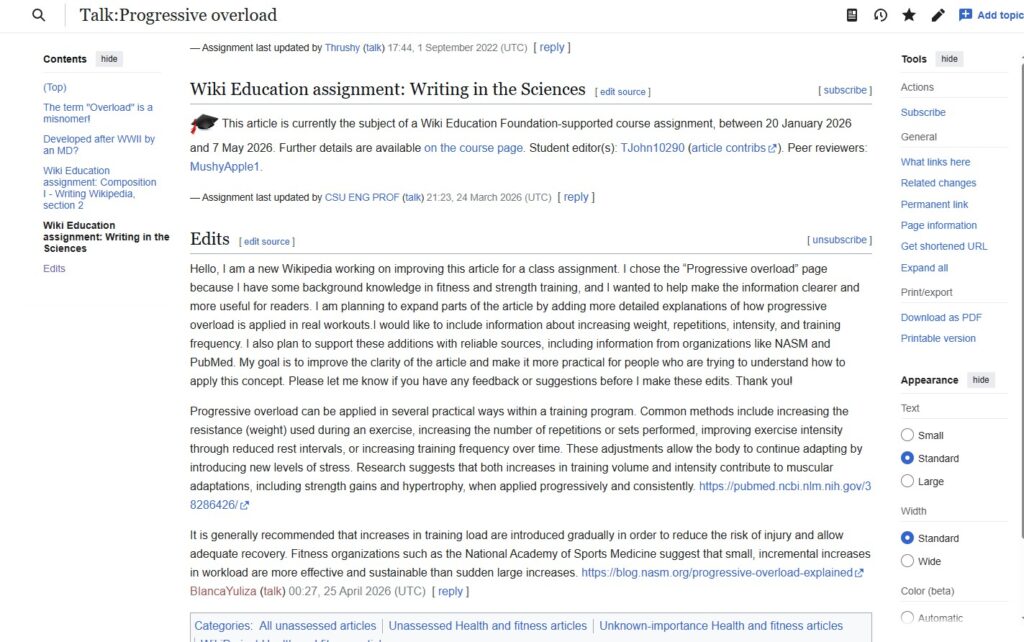
  • Editing Wikipedia on improving a progressive overload page

    https://en.wikipedia.org/wiki/Talk:Progressive_overload#Edits

    For this assignment, I chose to edit the Wikipedia article on progressive overload  because it’s something I’m already familiar with from working out and learning about fitness. When I first read through the article, I noticed that it did a good job explaining what progressive overload is and even included some history and scientific background. However, I felt like it was missing clearer, practical explanations of how people actually apply this concept in real workouts.

    One of the main edits I made was adding more detail to the methodology section. I included a clearer explanation of how progressive overload can be applied in a training program. For example, I added that it can be done by increasing weight, doing more repetitions or sets, reducing rest time, or training more frequently. These are all common ways people progressively challenge their bodies over time. I supported this with a research-based source from PubMed, which explains how increasing training volume and intensity leads to muscle growth and strength improvements. Adding this made the article more useful for readers who may not understand how to actually apply the concept.

    Another important improvement I made was explaining the importance of gradual progression. The original article talked about increasing stress on the body, but it didn’t really emphasize how slowly  that should happen. I added information showing that increases in training load should be done gradually to avoid injury and allow proper recovery. I used a source from the National Academy of Sports Medicine (NASM), which explains that small, consistent increases are more effective and sustainable than sudden large jumps in intensity. This addition helps make the article safer and more realistic, especially for beginners.

    Overall, my goal was to make the article more clear, practical, and supported by reliable sources. I didn’t fix small grammar issues  I added meaningful content that improves how readers understand and use progressive overload in real life.

    This assignment also changed how I view Wikipedia. Before, I mostly used it just to quickly look up information without thinking much about how it was created. After going through the editing process, I realized how much effort goes into making articles accurate and reliable. You can’t just add random information  everything has to be backed by credible sources and explained clearly.

    It also made me think more about media literacy. Wikipedia is often seen as unreliable, but after doing this myself, I see that it can actually be a strong source when contributors use good research and follow guidelines. It showed me how important it is to question where information comes from and whether it is supported by evidence.

    Overall, this experience was more challenging than I expected, but it helped me better understand both fitness concepts and how information is created and shared online.

    https://pubmed.ncbi.nlm.nih.gov/38286426

    https://blog.nasm.org/progressive-overload-explained

  • Are TikTok and Instagram Actually Doing Enough to Stop Misinformation?

    Misinformation is one of the biggest problems on social media today, especially since it’s so easily accessible. From this week’s module, one thing that stood out is that social media platforms don’t just show content randomly. Algorithms decide what users see, which means they can also push misinformation quickly. Because of this, platforms play a big role in shaping what people believe. For this blog post, I focused on TikTok and Instagram and how they try to reduce misinformation. While both platforms have systems and policies in place, their efforts show that misinformation is still difficult to control.

    1. TikTok & Instagram’s Efforts

    TikTok

    TikTok uses a combination of content removal, fact checking, and limiting reach to catch misinformation. According to TikTok’s official update, the platform removes content that could cause real world harm, especially around topics like public health and elections. Instead of only deleting content, TikTok also focuses on reducing how far misinformation spreads. If a video is flagged, it may not appear on the “For You” page, which is where most users discover content.  There is something called ”shadow ban” on TikTok. This happens when a user is posting anything that does not follow guidelines. In this case it would be spreading misinformation. This is important because TikTok’s algorithm heavily influences what goes viral.

    Instagram

    Instagram takes a different approach. It focuses on removing harmful misinformation, adding warning labels, and using fact checking systems. According to its policies, Instagram removes content that could lead to serious harm, especially related to violence or health claims. The platform also reduces the visibility of misleading content rather than always deleting it. The New York Times explains that Instagram has also tried to limit how often misinformation appears in feeds, especially during major events like elections. This shows that Instagram also uses its algorithm to control what users see, similar to TikTok.

    2. Examples of How Policies Are Used

    Both platforms apply these policies in real situations.

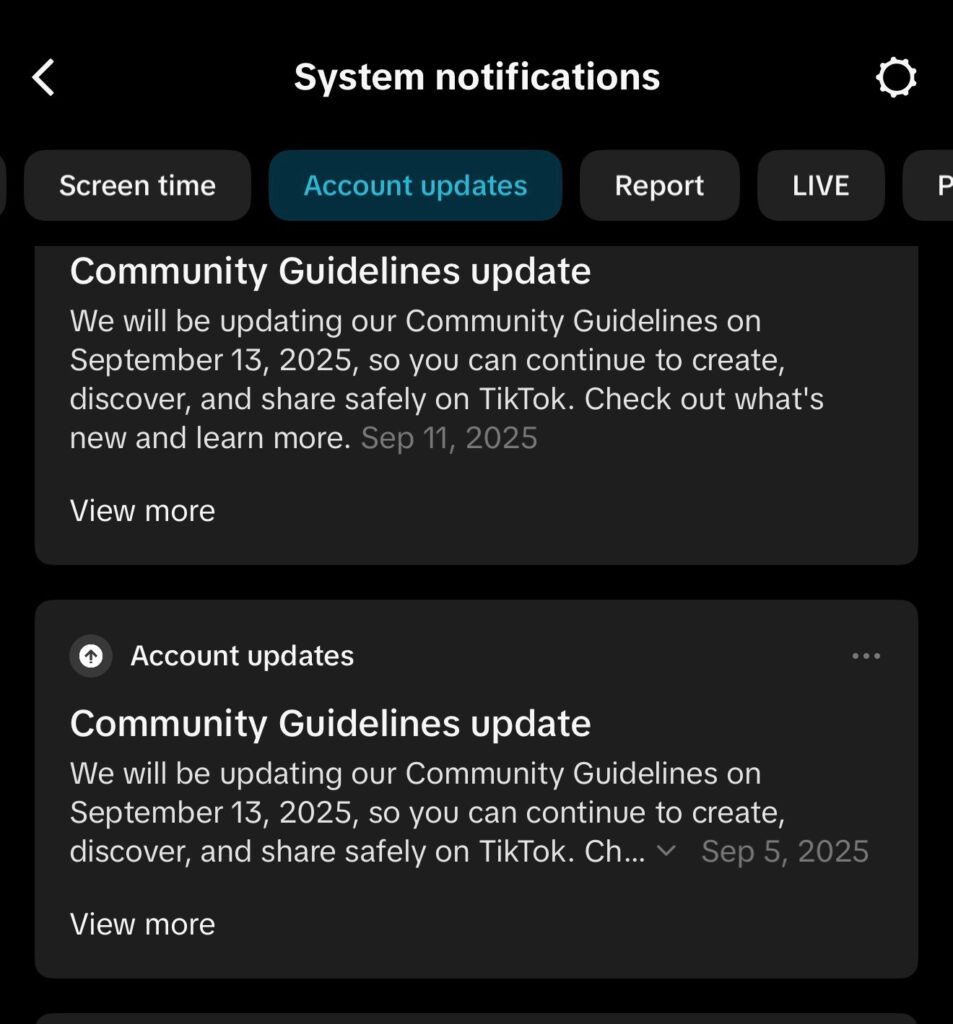
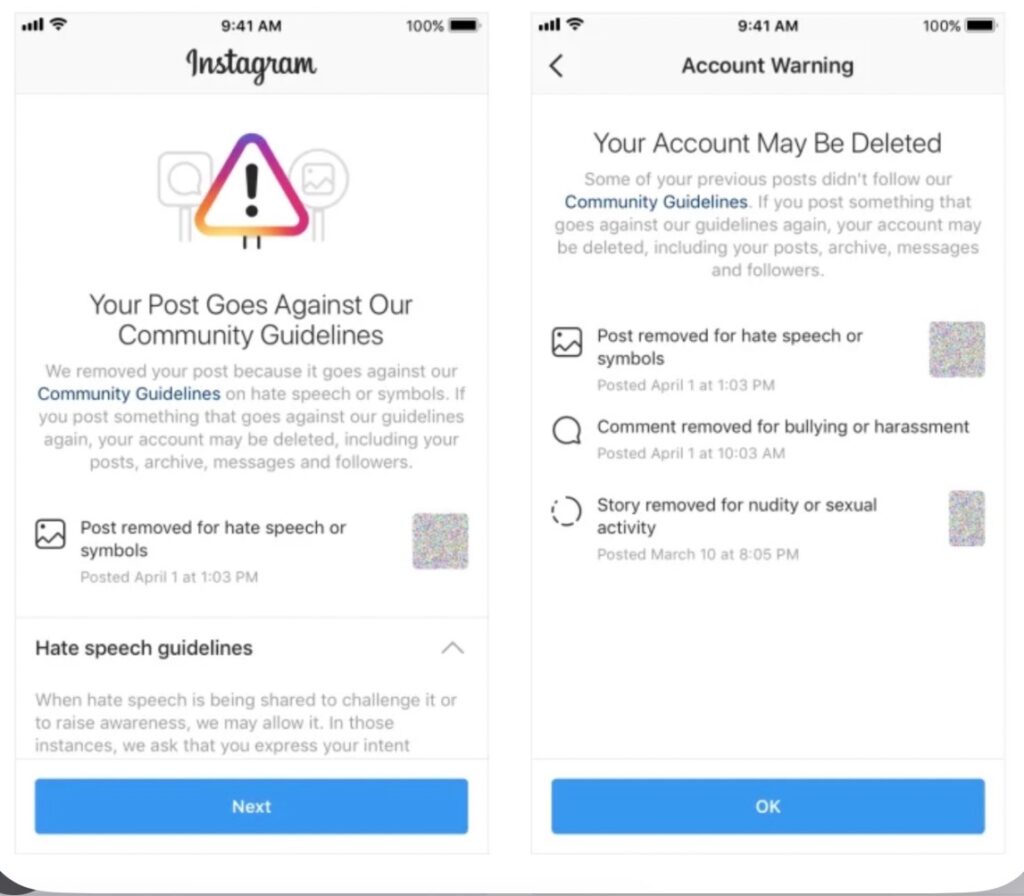
    On TikTok, misinformation related to health or safety may be removed completely if it is harmful. In other cases, TikTok may leave the video up but limit its reach so it does not go viral. For example, videos with misleading claims may not appear on the For You page. TikTok has options for you to report other TikToks. They also regularly send you updates to their policy and guidelines. 

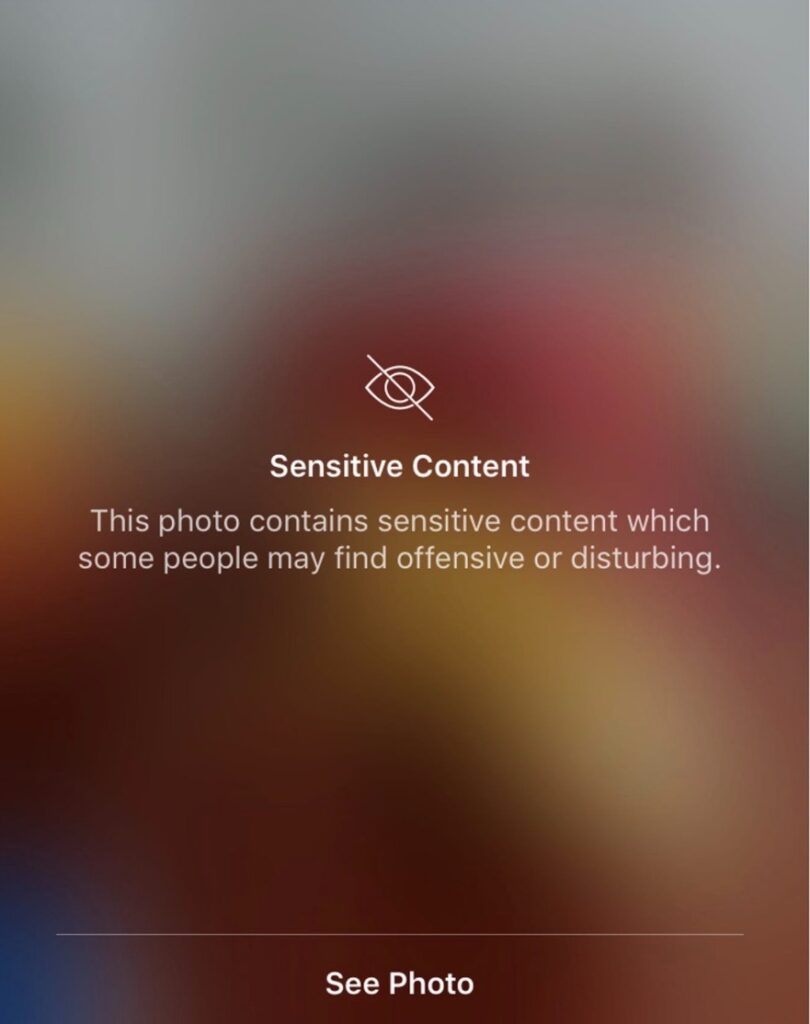
    On Instagram, users may see warning screens before viewing certain posts, especially if the content has been fact checked. The platform may also reduce how often those posts appear in feeds. Your posts will get taken down if they do not follow the guidelines. 

    These examples show that both platforms rely on a mix of removal, labeling, and algorithm control instead of just deleting everything.

    3. Evaluation of the Policies

    In my opinion these policies help, but they don’t fully solve the problem. One major issue is that misinformation spreads faster than platforms can probably respond. Social media allows content to reach large audiences quickly, and by the time something is labeled or removed, it may already have many views and shares.  TikTok’s system is strong because it uses multiple strategies, but the platform’s design makes it easy for users to scroll quickly without thinking. This increases the chances of misinformation spreading. Instagram’s approach is helpful because it provides context through labels, but it is not always effective. Many users ignore warnings or continue to share posts anyway. From my own experience using both platforms, I have seen misleading content still get a lot of engagement, even when it is labeled. This shows that current policies are not strong enough to completely stop misinformation.

    4. Improvements

    There are several ways TikTok and Instagram could improve their efforts:

    • Add bigger warnings before users share flagged content
    • Be more transparent about how their algorithms promote content
    • Preventing misinformation early instead of reacting after it spreads
    • Continue using professional fact checkers instead of relying on automated systems
    • Improve media literacy tools to help users recognize misinformation
    • Promote and spread awareness on feeds about catching and reporting misinformation

    These improvements could help reduce the speed at which misinformation spreads and make users more aware of what they are consuming.

    References

    TikTok Newsroom. An update on our work to counter misinformation.
    https://newsroom.tiktok.com/an-update-on-our-work-to-counter-misinformation?lang=en

    Full Fact. TikTok penalising misinformation content.
    https://fullfact.org/technology/tiktok-penalising-misinformation-content/

    Instagram Help Center. False information policies.
    https://help.instagram.com/1735798276553028

    The New York Times. Instagram tries clamping down on misinformation.
    https://www.nytimes.com/2020/10/30/technology/instagram-tries-clamping-down-on-misinformation.html

  • AI experience

    Google doc link https://docs.google.com/document/d/119-elINxUjPqJWHWENnQ3eaTJXPmzac59n0xQODWCWc/edit?usp=sharing

    For this assignment, I used AI to create a blog post about something I know pretty well, which is starting a realistic workout routine. At first, the AI response sounded good. It was organized, easy to read, and covered things like workout splits, consistency, and motivation. On the surface, it felt like something you could actually post. But once I read it more carefully, I started noticing that some of the advice was kind of off or too extreme.

    The biggest issue was how the AI made fitness seem way more intense than it needs to be. It suggested things like working out every day and doing cardio daily to see results, which isn’t realistic for most people. From my own experience and what I’ve learned, you don’t need to do all that to make progress. A balanced routine with a few workout days a week, proper nutrition, and rest days is actually more effective.

    This assignment made me realize that AI can be helpful, but it’s not something you should fully trust. It’s great for getting ideas or starting a draft, especially when you don’t know where to begin. But just because something sounds confident and well written doesn’t mean it’s accurate. You still have to go back, fact check it and rewrite it in your own voice.

    Overall, I’d say I trust AI as a starting tool, not a final answer. It can save time, but it definitely still needs a real person to make sure everything makes sense and is reliable. 

  • Is Creatine Bad for Your Kidneys? A Claim Analysis

    One claim I’ve been seeing a lot on TikTok is that creatine is dangerous and can damage your kidneys. I’ve even had my mother tell me to stop taking creatine due to this fear. I included multiple TikTok videos where people warn others not to take creatine because it’s “bad for your body” or “hurts your kidneys.” Since I go to the gym regularly and creatine is one of the most popular supplements, this caught my attention. It’s something that directly relates to my routine, so I wanted to actually fact check it instead of just believing what I see online.

    The first reason I was skeptical is because of how serious the claim sounds. Kidney damage is not a small issue, so if that were true, it would be a big deal. Another red flag was that all three TikTok videos I looked at didn’t provide any scientific sources. They were mostly opinions or quick warnings, which made me question their reliability. Because of this, I used a lateral reading approach SIFT method. I left TikTok and looked for more credible sources like medical websites and research studies.

    My first step was to check the Mayo Clinic article. According to Mayo Clinic, creatine is “generally safe” when taken at recommended doses and does not appear to harm kidney function in healthy individuals. This goes against what the TikTok videos were saying. However, it also mentions that people with existing kidney disease should be cautious and talk to a doctor before using creatine. That helped me understand where some of the confusion and experiences might come from.

    Next, I looked at the scientific study from PubMed. The research shows that creatine can slightly increase creatinine levels in the body, but this does not mean kidney damage is happening.  Creatinine is something doctors use to measure kidney function, so when levels go up, people might assume something is wrong. This misunderstanding is likely why the myth spreads so easily online.

    To further verify the claim, I found a UCLA article that explains how creatine should be taken. Reviews of creatine show that when taken at recommended doses which is around 3–5 grams daily, it is safe for most people and does not negatively affect kidney function.  I also found that long term studies in healthy adults consistently show no harmful effects on the kidneys. 

    I also considered why this claim is so popular. Social media tends to spread more dramatic or scary information because it gets more attention. Saying “creatine damages your kidneys” is more likely to go viral than explaining the full truth. Also, many people confuse correlation with causation. Just because something changes in the body like creatinine levels doesn’t automatically mean it’s harmful.

    After going through all of these steps, my final conclusion is that the claim is misleading and mostly false. Creatine does not damage the kidneys in healthy individuals when taken correctly. However, it may not be suitable for people with preexisting kidney conditions, which is likely where the misunderstanding comes from.

    This assignment made me realize how easy it is for misinformation to spread in the fitness world, especially on TikTok. A lot of advice is based on opinions instead of actual evidence. Taking a few extra minutes to check credible sources like medical websites or research studies can completely change your understanding of a claim. Instead of blindly following trends, it’s better to base decisions on real information. Especially when it comes to your health and what you put into your body.

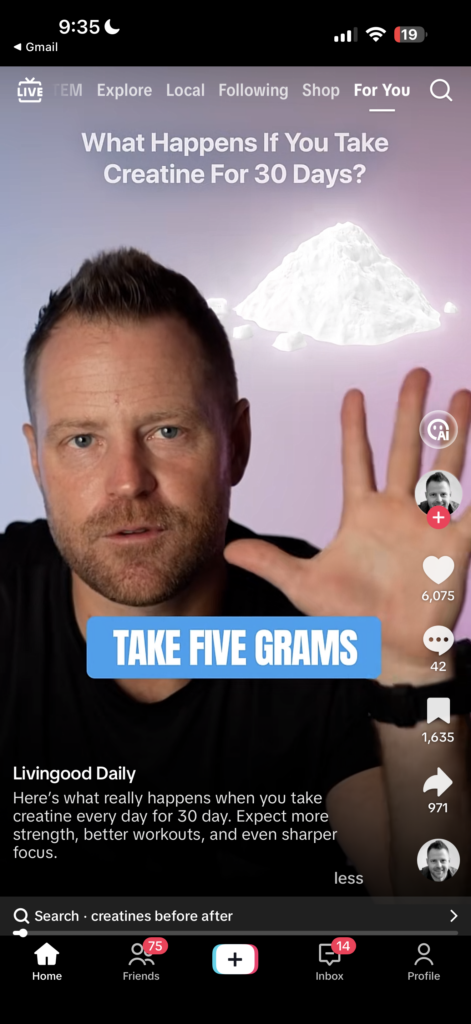
    https://www.tiktok.com/t/ZP8gkp95E

    This is a TikTok of a man explaining what creatine does to your body within a 30 day spand when taken correctly.

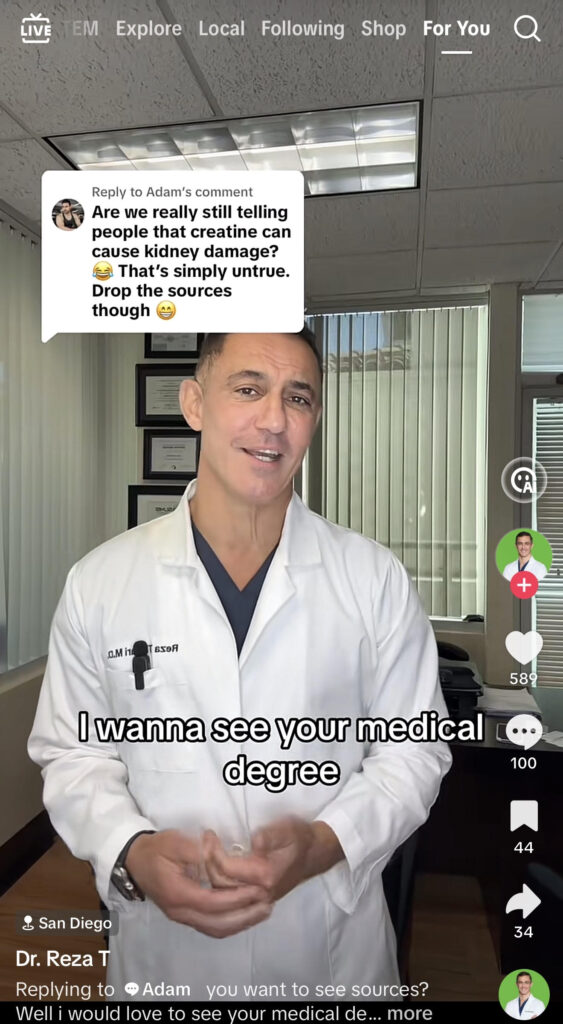
    https://www.tiktok.com/t/ZP8gkKaJ5

    This TikTok is a Doctor from California debunking myths and answering questions about creatine.

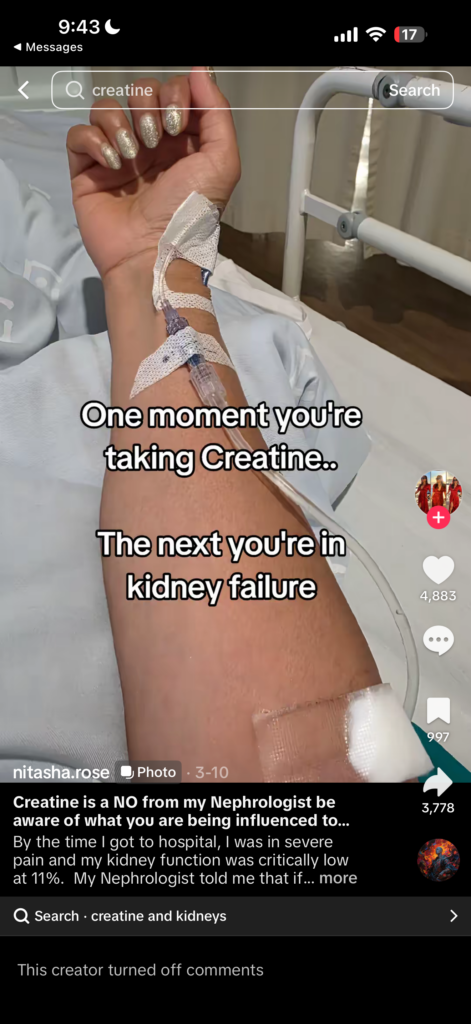
    https://www.tiktok.com/t/ZP8gk7Qwq

    This is a TikTok of someone claiming creatine caused them kidney failure. The comments are turned off. This does not look reliable.

    https://pmc.ncbi.nlm.nih.gov/articles/PMC8228369

    https://www.uclahealth.org/news/article/why-everyones-talking-about-creatine

    https://www.mayoclinic.org/drugs-supplements-creatine/art-20347591

  • Vlog post assignment: Fitness journey

    Sticking to a workout routine can feel really motivating at first, but the hardest part is making it something you can actually keep up with long term. In my video, I talked about how creating a routine is what really makes a difference. That includes having a workout split that works for you and figuring out what kind of schedule fits into your life, instead of trying to copy what works for someone else.

    One thing I’ve realized is that fitness is different for everyone. Not everyone trains the same way or has the same goals, and that’s okay. Some people focus more on strength, others focus on aesthetics, and some are just trying to stay active. According to this Gold’s Gym workout planAttachment.png, building a routine over time and staying consistent is what actually helps you improve, instead of trying to do everything perfectly right away. That really connects to how I see the gym now.

    I also talked about how food plays a big role in your routine. What you eat helps support your workouts and recovery, but again, it doesn’t have to look the same for everyone. A https://www.healthline.com/nutrition/26-muscle-building-foodsAttachment.png explains how protein, along with carbs and fats, all work together to help your body build and recover muscle, which shows how important balance is.

    Overall, I chose this topic because it’s something a lot of people can relate to. Building a routine, figuring out your split, and learning what works for your body is a process, and it’s different for everyone. I hope wherever you are on your fitness journey you achieve your goals! 

    https://www.healthline.com/nutrition/26-muscle-building-foods

  • Blog post #2 Learning how to spot misinformation

    Misinformation is something we run into constantly, especially on social media, and it’s not always obvious what’s true or misleading. Because of that, tools like RumorGuard and the Bad News game are designed to help people understand how misinformation works and how to recognize it. After using both, I noticed they each focus on different parts of the problem, which actually makes them more useful together.

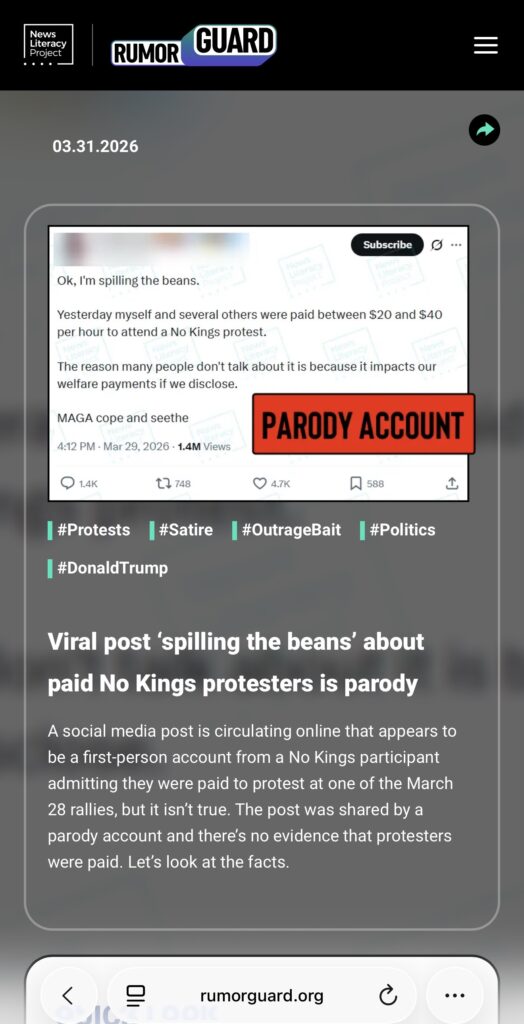
    The first tool I explored was RumorGuard, created by the News Literacy Project. It uses real viral posts and claims, then walks you through whether they are accurate or not. What stood out to me is how it explains the reasoning behind each answer instead of just labeling something as true or false. It highlights things like missing context, unreliable sources, or misleading visuals. It almost feels like you’re being guided through the same process journalists use when verifying information. Since the examples are similar to what people see online every day, it feels practical and easy to apply outside of the tool.

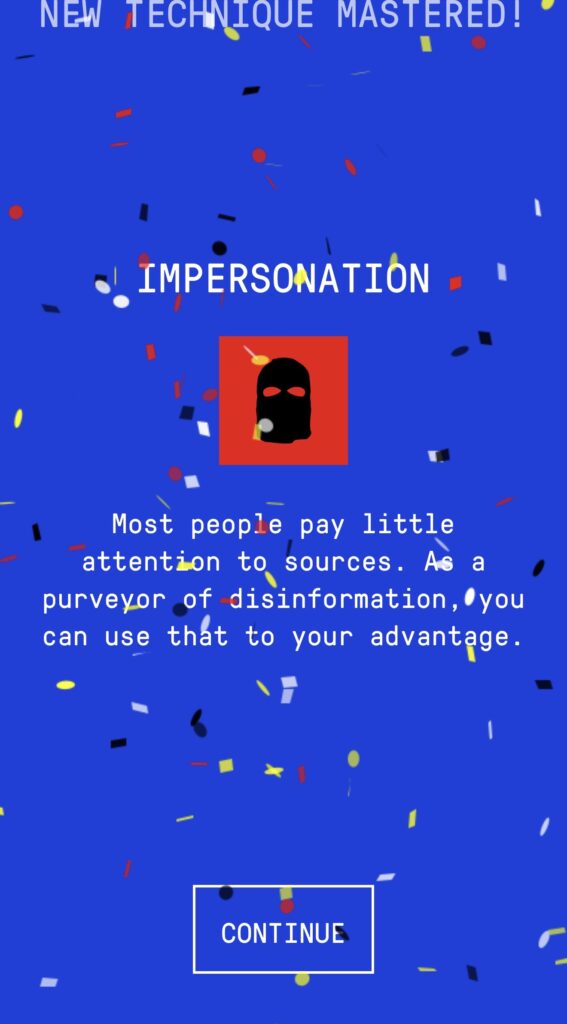
    The second tool, the Bad News game, takes a completely different approach. Instead of analyzing misinformation, you actually create it. The goal is to build a following by using strategies like emotional appeals, exaggeration, and conspiracy thinking. While it might seem strange at first, it quickly shows how simple it is to influence people’s opinions. This experience is based on inoculation theory, which suggests that exposure to misinformation techniques can help people recognize them later. Playing the game made it clearer how certain tactics are used to grab attention and spread quickly.

    Looking at both tools side by side, they each have their strengths. RumorGuard focuses more on developing critical thinking and fact checking skills, which are useful in real situations. It’s straightforward and informative, making it easy to follow. The Bad News game is more interactive and focuses on the strategies behind misinformation. It helps explain why certain content is convincing and why it spreads so easily. One limitation of the game is that it could make users overly cautious, but overall it still provides a valuable perspective.

    The article “The Use of Critical Thinking to Identify Fake News” explains how important it is to actually stop and question what you’re seeing online instead of just believing it right away. It talks about how people tend to trust information that matches their own opinions, which is why misinformation spreads so easily. This connects to tools like RumorGuard and the Bad News game because they both help you think more critically. Overall, it shows that learning how to question information is one of the best ways to avoid being misled.

    In general, interactive tools like these are a strong way to teach topics like misinformation. They go beyond just explaining concepts and instead involve the user in the learning process. The Bad News game helps people understand how misinformation is created, while RumorGuard shows how to evaluate and respond to it. With how quickly false information spreads online, learning these skills is becoming more necessary.

    Referances:

    No, Minnesota Vikings’ new stadium menu isn’t “completely vegan.” (2024). Rumorguard.org. https://www.rumorguard.org/post/no-minnesota-vikings-new-stadium-menu-isn-t-completely-vegan

    ‌

    gusmanson.nl. (n.d.). Bad News – Play the fake news game! Bad News V2. https://www.getbadnews.com/en

    ‌

    Machete, P., & Turpin, M. (2020). The Use of Critical Thinking to Identify Fake News: A Systematic Literature Review. Lecture Notes in Computer Science, 12067, 235–246. https://doi.org/10.1007/978-3-030-45002-1_20

    ‌

    Bad News game screen demonstrating the “impersonation” tactic, showing how fake accounts can be used to manipulate audiences who don’t pay close attention to sources.
    RumorGuard example showing a viral post that claimed protesters were paid, which was later identified as satire from a parody account, highlighting how misleading content can spread online.